Why static HTML is the simplest path to fast, portable websites
The core idea
Static HTML architecture means the server returns a finished HTML document on every request, instead of running an application server that assembles the page per visitor. CSS, images, and small bits of deferred JavaScript come along for the ride, but the critical content is in the initial document. This is the oldest, fastest, and most portable way to ship a website.
Why it matters for SEO and answer engines
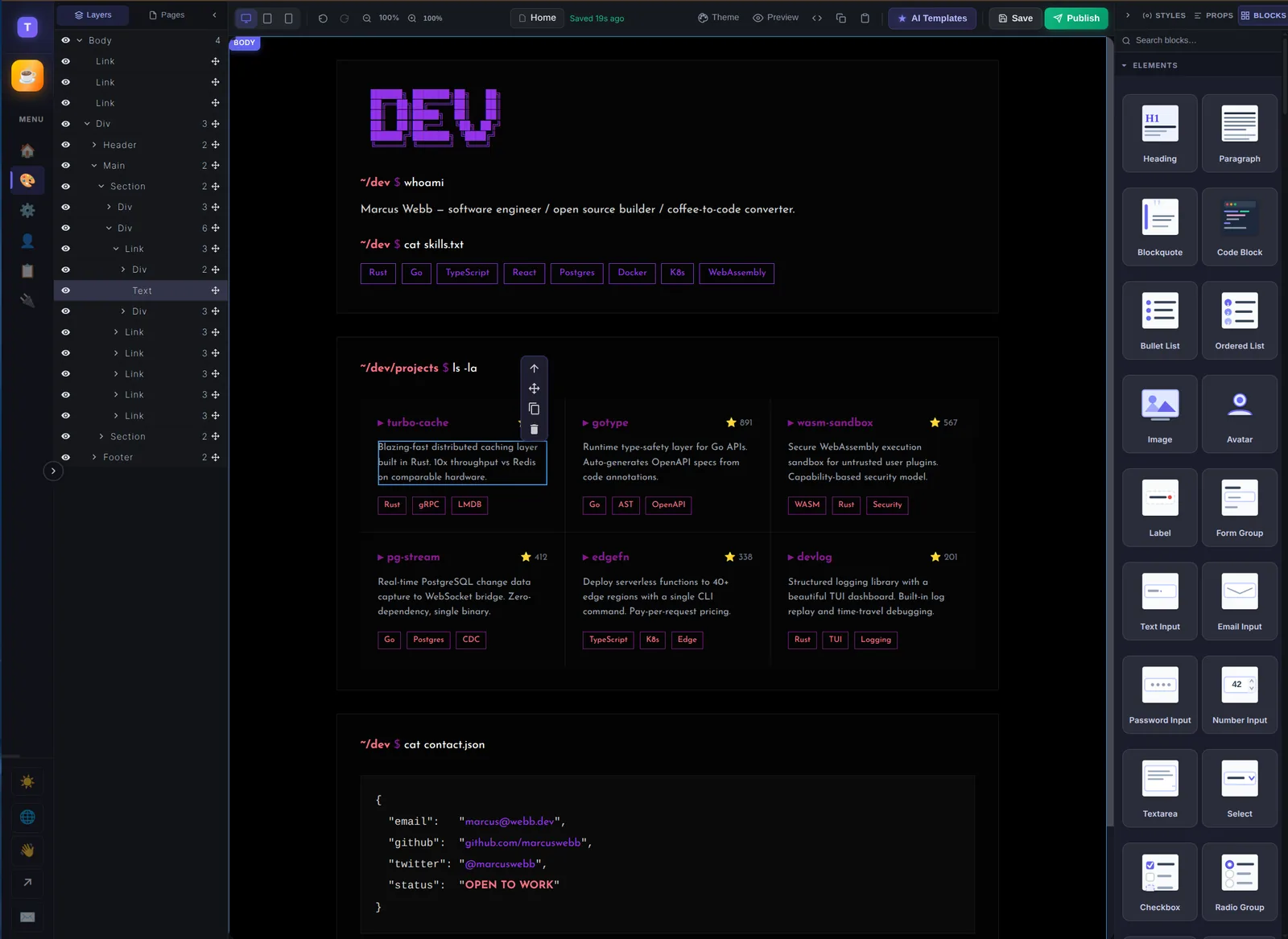
Crawlers and answer-engine fetchers do their best work when the content is in the initial HTML. Static architecture removes common indexing delays: no hydration delay, no API waterfall, no JavaScript-rendered headings. Tilkly generates static HTML by default and offers a static HTML export of the same markup, so the live site and any future migrations stay aligned.
When you export the site, keep folder names tidy, preserve canonical URLs, compress images, and set sensible cache headers. That gives search engines a fast, crawlable site and gives the next developer a clean starting point.